


Guest Opinion: Say Yes to Tunney Lee Plaza
The late Tunney Lee--architect, urban planner, and community historian-- made great contributions to his childhood neighborhood of Chinatown. Now, it’s time we give back and name a key section of this iconic Boston district after him.
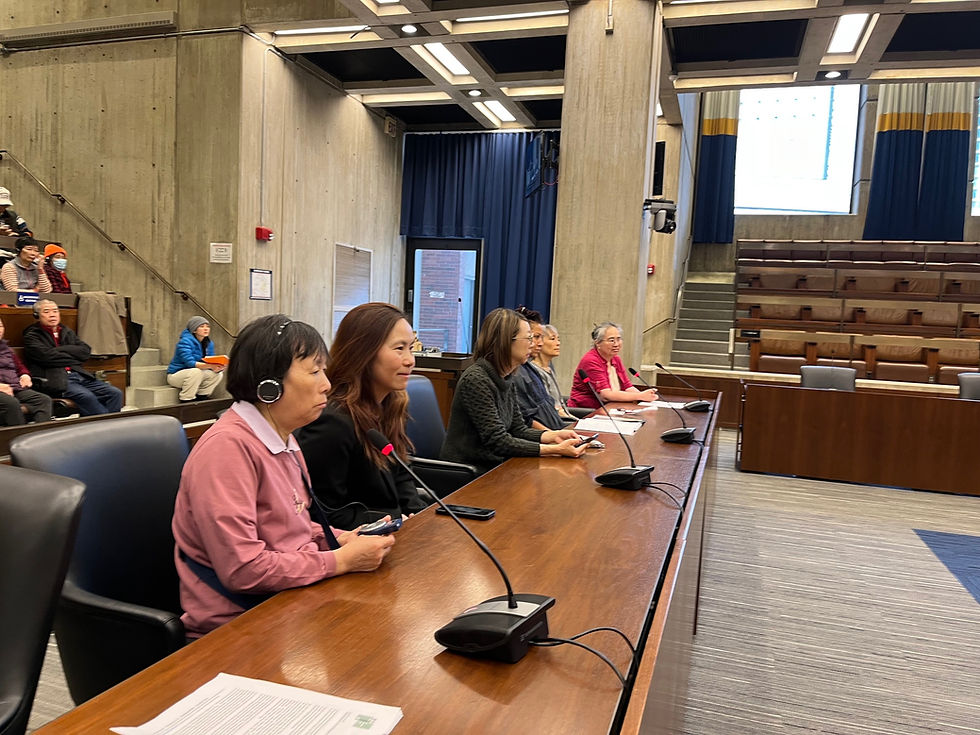
That was the message this writer and others presented at an April 6 City Council hearing, speaking directly to councilors and the dozens of Chinatown residents who filled the Ianella Chamber at Boston City Hall. Our simple request: Advance the improvement project on Harrison Avenue and name it Tunney Lee Plaza.
The painted area and island at Phillips Square, where the Christmas tree lighting happens each year, is slated for a permanent design that incorporates heat mitigation, greenery, and public art.
At a well-attended design charette last spring, community members of all ages gathered around tables with maps and pictures to develop a vision for this public space. As five different small groups reported on their ideas, a common idea emerged that this project could bring visibility to Chinatown’s history and stories, and the entire group voted to name the project Tunney Lee Plaza.
The April 6 hearing included testimony from Alice Kane of the Chinese Historical Society of New England, who pointed out that the area was the birthplace of what we call Chinatown today. Lee, born in Taishan in 1931, moved to the neighborhood with his father at just 7 years old. Tunney Lee’s daughter Kaela Lee spoke about her father’s childhood on Oxford Place and how his love for Chinatown as an urban village informed and shaped his long career, which included becoming the head of MIT's Department of Urban Studies and Planning. Angie Liou of the Asian Community Development Corporation spoke about Lee’s mentorship of generations of Chinatown leaders and his ongoing presence at Chinatown Master Plan Committee meetings.
Dr. Karilyn Crockett, professor of urban studies and planning at MIT and author of People Before Highways, spoke to Lee’s impact on communities across the region and urban planners across the globe. Crockett called Lee “a towering giant of creativity, compassion, and intellectual power who understood how cities worked best.” As a young urban planner, he drew from his experience in Chinatown to work tirelessly with communities in Boston and Cambridge and stop the I-95 highway from running through the heart of the city. Chinatown resident Xiaohua Qiu spoke to the importance of the project for the well-being of residents, especially in older buildings in the heart of Chinatown’s commercial subdistrict. Speaking in Taishanese with interpretation by Baolian Kuang, she talked about escaping extreme heat by sitting in the plaza space until 2 or 3 a.m. on a hot summer night, and urged the City to move quickly and fully fund this project.
In keeping with the historic significance of the site, the project designers have proposed a sidewalk of tiles marking points in Chinatown’s history. As urged at the hearing, Tunney Lee Plaza can become a keystone for developing a historic corridor along Harrison Avenue that celebrates Chinatown as a historic and cultural district that anchors immigrant working class families and small local businesses.
The corner of Harrison Avenue and Oxford Place has recently been identified as the priority site for a new city historic marker. The mural Tied Together by a Thousand Threads hangs across the street on a historic vacant building at 15-25 Harrison Ave. At Harrison and Beach streets, a marker on the Immigrant History Trail offers shifting photographic images of garment workers from the 1930s and 1960s. Artist Wen-ti Tsen will install a life-sized bronze statue of a garment worker on Harrison Avenue, and the Tufts University Bookstore features a window exhibit on Chinatown history.
As Crockett reminded us, “Tunney played for the long game. He understood that conversations, listening, community building was about building generations of connection, of care, and mutuality...He said yes to us, he said yes to life, he said yes to people, and I hope you will say yes to Tunney on this day.”
Lowe is executive director of the Chinatown Community Land Trust.


Let's make this happen!
Yes to Tunney Lee.
Yes to Tunney Lee.