


‘It’s Not About Me Anymore’
Updated: May 8
For Mother’s Day, Sampan talks with four moms about parenting, tradition & their own childhoods
One is a student, worker and rapper. Another has worked since age 14 and ran for city council in Lynn. Another is an internal medicine and gastroenterology doctor at a major teaching hospital. Another is longtime activist.
All four are mothers.
In honor of Mother’s Day, Sampan has interviewed four moms about what they’ve learned from raising their children, how they approach parenting and what they learned about their own upbringing as children of immigrant parents.
Here are their stories:
Discovering the Inner Child
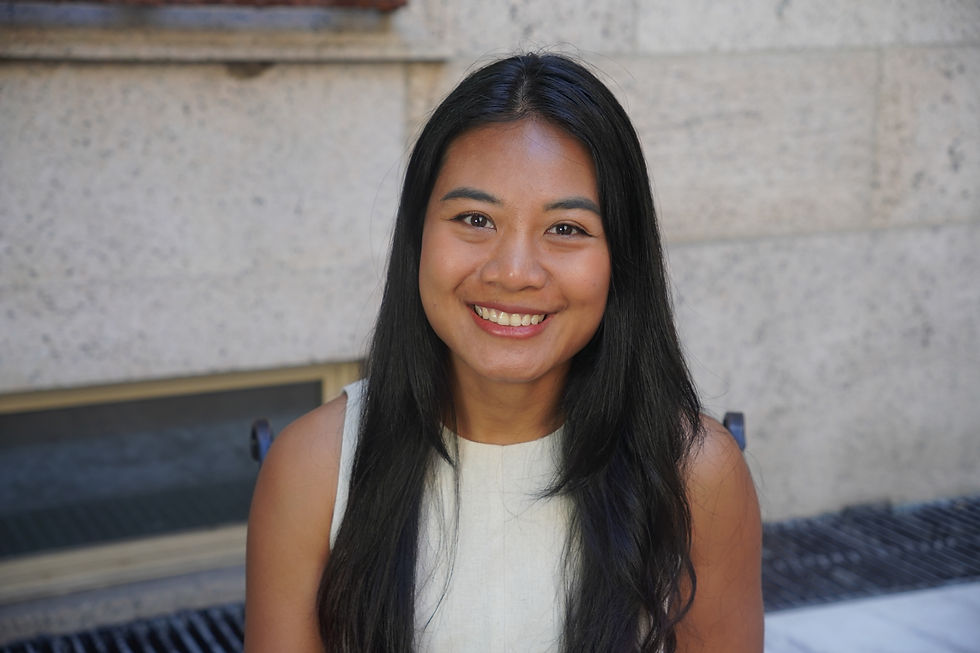
For Cinda Danh, 34, motherhood has reminded her of the power of being silly.
“Becoming a parent, and especially now as the mom of a toddler, I kind of realized that I have to always be ready to play and be silly. And that is so fun. It reminds me how important it is to take things more slowly and to play.”
This opportunity, however, wasn’t always afforded to Danh when she was growing up. The child of Cambodian refugees, her own childhood, she says, had its challenges. Her parents were mainly trying to survive: They were often either working or sleeping and trying to make ends meet in America, while struggling with English. And so they were unable to be emotionally present for Danh when she was little. By the time Danh was 14, she started working at a McDonald’s and had no break from employment until she was temporarily laid off during the pandemic.

“I just never got to fully be a child because life was always so serious,” she says. “I was always so focused on getting a job, going to school, and not enough time being silly.”
But now with her own daughter, Emery, she has learned to take time to stop and look at the small wonders of the world, to laugh and play.
“Her imagination, I think it helps me embrace my inner-child as well… Imagine seeing bubbles for the first time – mind blowing, it’s crazy,” says Danh. “Anytime we go for a walk, she’s like, ‘Mommy, can I bring my bubbles?’ And I’m like, ‘Yes! We need to do this.’ And sometimes in the middle of a work day, she’ll be like, ‘Mommy, let’s walk like a crab. I’ll be like, ‘Yes! Why aren’t we doing this more?’ It just brings more joy … when you can just be silly… It’s just so rewarding to see her learn and grow.”

But it’s not always easy. Like most parents of young children – Emery is on a preschool wait list and not yet in school – Danh says parenting and working full-time remotely as a digital data account manager can be a struggle, especially while also making time for her artwork and earring-making side gig.
“Balancing things, it is hard. It is really hard. But I do the best that I can, and I’m grateful that I can be with her all the time.”
She says she has a great coparenting relationship with Emery's father, which helps her be a better mom. Midway through her conversation with this reporter, Emery could be heard in the background, calling for her mom, “poopy!”
“My employer is really understanding. One time I was on a video call with a client during Halloween and she just popped into the screen and was like, ‘Boo!’ And everyone was really understanding (and) the client played along, pretending to be scared.”
Her baby arrived a few years after Danh had already had several life-changing events. First, in the 2010s, her family home was threatened with foreclosure. This spurred her to become politically active, culminating in her 2019 bid for Lynn City Council – she won the preliminary, making it as one of the top two candidates but lost the final election. And then, once the Covid-19 pandemic hit, she found herself for the first time in her life temporarily out of work. That’s when she began experimenting more deeply with the arts, and started Cinda’s Crafts.
“I was able to work with my hands and that became extremely therapeutic. It became something I could share with the community and spread joy.”
A couple years later, just after she was pregnant with her daughter, she began work on a photo book profiling mothers of Lynn. Her book series, “Faces of Lynn,” she says, is a labor of love. For that Mother’s Day edition that came out about two years ago, she says, she profiled and photographed over 100 moms in her city.
But earlier in her life, Danh had thought she would never give birth.
“I never thought I wanted kids. I thought I just wanted like five cats,” she jokes.
But since giving birth, she says, she has embraced and enjoyed motherhood and Danh has taken clowning around with her kid … seriously.
“I got into juggling over a year ago... I (then) got into circuses – and being the mom of a toddler, I always have to be ready to be a silly goose.”
The natural trajectory of this was to become a clown, she says.

“I went to clown school at the Northeast Clown Institute,” she says. “I attended and it was the best thing ever. Now I know how to twist balloons … and now my daughter gets to grow up with random circus acts in the house. I’m teaching her how to juggle. … And she’s helping me with being silly. She loves looking at photos of me as a clown. She’s helped me find myself.”
Prescription for Parenthood
For Dr. Michelle Lai, her job as a mom is preparing her two daughters – age 10 and 12 – to grow up to be “independent, responsible, kind adults.”
But, says Lai, parenting kids today has plenty of challenges that weren’t around when she was their age. Lai was raised in Taiwan until age 8 and then Japan until 10, before her family moved to the U.S. Back then, she said, not only was social media nonexistent, but so was the internet, which didn’t really see widespread use until after she was in high school. Another big difference was that going places on her own was common for kids.
“To preschool, my mom took me the first day and then after that I walked by myself,” says Lai. “It was a different world.”
But today, she says, if she lets her 12-year-old daughter walk four minutes away to the eye doctor, she hears comments asking why her daughter is alone and where are her parents.
This inability for children to navigate their communities and to learn life skills early is a loss, she says. For her, it’s important her children can begin to go on small walks in her town, such as to the store or to nearby appointments.

“To transition from being a child to a functioning adult, there has to be multiple steps. And preparing them – that’s my job. My job is not to make sure everything is provided for them until the end of life; my job is to make sure they can land on their feet no matter what adversity they come up to.”
On the other hand, Lai says, kids today have access to often highly addictive social media, which she calls the “nicotine of our time.”
She’s been active in trying to limit social media usage, cofounding a group called Brookline Kids Unplugged in her community. To help her daughters avoid texting, she says, she even got a landline phone so they could actually talk to friends. Venting or gossiping in a text, she points out, poses more risks than blowing off steam in a phone call because with texts a record of the conversation will be out of the child’s hands afterward.
The Power of 'No'
As a parent, Lai views saying “no” to her kids as part of her responsibility. But, she says, so is helping her girls figure out who they are and to develop their own identities.
“We’re exploring their strengths and what their passions might be,” she says, whereas when she was a kid, her family put a lot of pressure on her to get into what they believed would be a good, stable job, such as medicine or engineering or similar profession.
“We’re coming from very different backgrounds,” she says, “my parents’ concern was survival and making sure that we had job stability, that we could feed ourselves, and feed our families and that there are certain professions that guaranteed more stability – you just didn’t have the luxury of saying like, ‘What do you want to do in life?’”
As a gastroenterology doctor and parent of two kids, balancing time can often be a challenge. She says that for several years when her girls were younger, she had to forgo sleep and exercise. But, she says, she has also learned to skip unnecessary work conferences and travel so that she can be close to her girls.
“I really don’t want to miss out on this time (as they grow up),” she says.
But having an ongoing, positive relationship with her daughters is more important, she says, than being their friend.
“I want a good relationship with my kids. I think the fine balance is having a really good relationship that later on in adult life would move into an ongoing, good relationship. (But) it’s not my job to be their friend and make sure they’re happy. It’s my job to make sure they grow up to be independent, responsible, kind adults.”
Faith, Love and Feeling
Nita Slay, a hip hop artist from Lynn, has a lot on her plate. The 27-year-old mom works, is studying for an associate's degree in business, performs regularly, volunteers at her church, and raises her four-year-old son.
But, she says, she always makes sure to take time to ensure her child, Caiden, is aware of his own feelings and is emotionally regulated. She wants him to know when he’s feeling anger, frustration, disappointment.
“When he gets upset,” she says, “I will invoke emotions like, ‘Hey, do you know what you're feeling right now? Do you know what this could lead to?” she says.
As the only girl and oldest child in a traditional Cambodian American family of six, she says, this kind of introspection is something that wasn’t afforded to her when she was a child. And neither was the space to make or consider her own choices.

Nita Slay with her son, Caiden. Courtesy photo by Sam Mam.
“I was just told like, ‘Oh, don't cry.’ Or like, ‘Get over it.’ Or, ‘If you can't accept that the answer is no, then you should have never asked,” says Slay. “So that's what I mean by how I raise him, and give him his own choices, and allow him to see what he's actually doing for himself.”
Slay’s mother and father both came to the U.S. as young children, she says, and much of their life was a struggle.
“The way that I was raised was very traditional,” she says. “As a woman, I did all the cleaning, the dishes, I did all that down to the tradition. There wasn't a lot of freedom.”
As she parents Caiden, however, she says she has learned to take the positives from her upbringing and change what she didn’t think was helpful. Giving him options and allowing him to consider their consequences, she says, is key to him maturing.
“To question the options that he's given, right? I feel like when I was growing up, I didn't know that there were other options, for example, for channeling anger. I felt like the only option I had was to be quiet, and by the end of the night, I had to regulate my emotions.”
What helps keep Slay grounded today as an adult, she says, is her faith in God – and that’s something she learned from her own family.
“I’m very religious. I go to church,” she says. “So there's certain things that I live by.”
Her role in her own church, she says, has also helped her to become a better parent, in part because she runs the youth ministry, where she often leads elementary and high school age boys in her congregation.
When asked how she balances her time, Slay says: “God.”
Her leadership at church, she says, has allowed her to find her own rhythm in life and as a parent, and, she says, she’s got a “great support system.”
And that support is helping her raise Caiden with the security and resources he’ll need to thrive.
“Now it's not about me anymore. It's about him, and it always will be.”
Her advice to other moms? “I would say, as a mother, the most important thing is you know your child best, and don't let anybody tell you otherwise. And the other thing that I would say is always pray for your child.”
Building a ‘Village of Care’
Irene Jor spent much of her work life as an activist and advocate for care workers. Now, she’s got an 8-month old baby daughter to care for.
“It’s very humbling, and it reminds me of what parents need in order to be able to show up,” says Jor, who recently was hired as the executive director of the Chinese Progressive Association. “The first four months, I very much was focused on giving her around-the-clock care…. She’s so little and she’s got a lot of needs – eat, sleep, changed diapers, and that she is able to play.”
Jor said that having her baby daughter reminded her of the importance of her activism and advocacy work and made her more empathetic.
“After she was born, I was really like, ‘Hey, I have to get back to this work.”
Prior to having her daughter, says Jor, who is in her mid-30s, she was working freelance projects and studying fashion, so she did not have to take a traditional parental leave. Then, several months after her child was born, she was hired as the new executive director at the CPA. So far, she says, her new job, which started on a part-time basis and will move to full time, has been supportive.
“I never thought I would try to bring a baby to work,” she says, but she has from time to time and said sometimes her coworkers will hold her baby for a bit or otherwise lend her a hand.
“The community at CPA has been very helpful,” she says.
But Jor says she also relies on some daycare, her partner and parents for help.
“I remember stepping back,” she says after her daughter was a few months old, “and feeling like I’m responsible for making sure she has a village of care.”

As she looks back on her own upbringing, she considers how her parents who were were trying to make it as immigrants in the U.S., and build a solid financial footing, so they were not able to be around as much as she hopes to be for her daughter. But, she says, now as grandparents, they’ve made lots of time to spend with her daughter and family.
“They didn’t have a lot of time for us, because they had to work so much,” she says. Her father worked in a restaurant and now works in a university dining hall and her mother in medical billing. “They wanted to make sure the economics of our household were solid. They worked a lot of hours, a lot of overtime.”
She said she’s always admired and tries to emulate their work ethic, but she also realizes the importance of quality time with family.
“Now they make a lot of quality time for not just my daughter, but for me. It’s really lovely because I feel like we get a second chance to spend time together as a family.”
Jor said she understands why the cost of raising a child could make some would-be parents worry about having kids. For several years, Jor worked as an organizer in New York City and still remembers conversations she had with other organizers who said they wouldn’t be able to afford having children.
“I remember when I lived in NYC as an organizer and I was in my 20s and met people in their 30s who didn’t think they would have children because daycare costs as much as their income. That really stuck in my mind.”


Comments