


Open Book Policy
Updated: Aug 15
As list of challenged books grows, new state measure vows to protect libraries from censors. But what's behind the ban movement?
Librarian Andrea Fiorillo is quick to point out the actual dangers kids face today. Getting shot at school might be statistically rare, but it’s still a real, documented risk, she points out. More common is typing in a few words into a browser and instantly accessing hard-core pornography on a smartphone.
But stumbling across a children’s book in a public-school library that would traumatize kids for life? It’s probably not gonna happen.
“We wish the most dangerous thing in a child’s life were reading a book,” says Fiorillo, who serves as the co-chair of the Massachusetts Library Association’s Intellectual Freedom and Social Responsibilities Committee.
Yet, over the years since the Covid-19 pandemic, Fiorillo has seen her colleagues get doxed, harassed and worse by would-be censors falsely accusing librarians and school staff of stocking their shelves with smut or other supposedly harmful material.
“They are personally calling us pedophiles or pornographers and groomers,” Fiorillo tells the Sampan on a recent phone call. “This is beyond the pale.”

Many of the titles she’s seen inappropriately targeted include books that offer sex education in terms kids can understand, or discuss biology and anatomy. Others are about queer and transgender identities or racism and civil rights. Some of the books deal with grieving and death, both of people and of pets. Other works discuss Palestine.
While it’s true that censorship is an age-old problem, including for libraries, Fiorillo says what’s been so unsettling lately is the sheer volume of titles challenged. So are the aggressive tactics used by those trying to block books, she says. Throughout her career, Fiorillo has seen attempts here and there to ban this or that title. Attacks come from liberals and conservatives alike: Some liberal activists, for example, didn’t like that Mark Twain's Adventures of Huckleberry Finn contained racial slurs; some conservatives, on the other hand, didn’t like books that talked about sex. She’s seen all of that. But it used to be in Massachusetts that just a handful of titles were challenged each year. From the year 2011 to 2020, for example, fewer than five individual titles were targeted annually. But by 2021 that number doubled in the state to 10 titles. Ten quickly turned into over 50. By 2025, the number of books under fire blew up: 229 titles. Nationwide, the situation is worse, say free speech advocates. They point to a bill moving through Congress dubbed the “Stop the Sexualization of Children Act,” which, while the title might sound reasonable, critics say would in reality curb free speech in school libraries. They also point to the enormous number of books under assault – 4,235 unique titles were challenged in 2025 in libraries around the country – according to the American Library Association.
But it’s more than just people making a stink about a book. A couple years ago, a police officer in Great Barrington, Mass., was reportedly sent to investigate a graphic novel, Gender Queer, in a local middle school. The probe ended quickly with no finding of wrongdoing, but it raised concerns over free speech. And Sampan has reported on a Muslim school teacher in Massachusetts who was doxed and harassed because of a math presentation she made a couple years ago that was falsely accused of being antisemitic. Sampan also covered how the Massachusetts Institute of Technology allegedly punished a South Asian American grad student for an essay he wrote about Palestinian activism in a student-run zine that was also banned from the university.
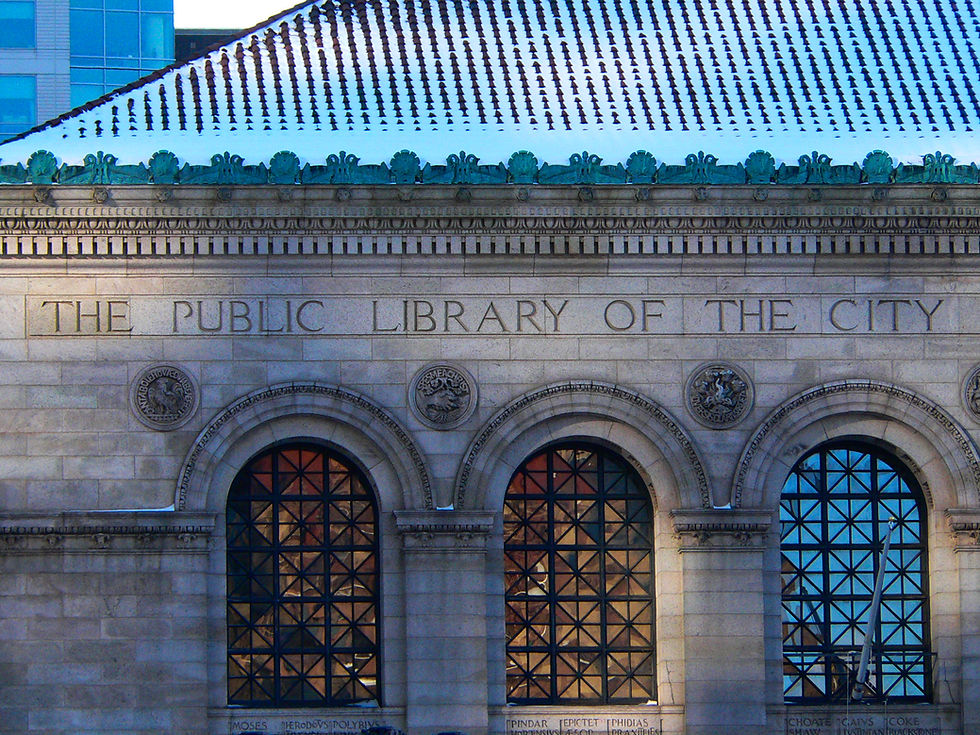
Probably one of the most high-profile recent attacks on a library in Massachusetts occurred in the spring of 2024 in Newton. A photographer, Skip Schiel, attempted to hold a reception for his black and white photo exhibit called, “The Ongoing and Relentless Nakba, the Palestinian Catastrophe of 1948 to the Present” at the Newton Free Library. Protesters overwhelmed the event, effectively shutting it down, according to Schiel and press accounts. A box truck circled around the library, posting on its side large images of the faces and names of Newton’s mayor and library director, accusing them of “hosting an exhibit promoting a vicious blood libel against the Jewish community.”
As has been consistently the case with many of the challenged materials over the years, however, the actual content of the show at the library was, in reality, devoid of graphic or violent imagery. At the time, one Palestinian American at the reception later told the Sampan she felt the works were pretty “innocuous.”
That didn’t stop some in the massive group of protesters from allegedly calling her and other speakers at the reception terrorists and rapists.
“I was there,” recalls Fiorillo on the phone with Sampan. She says what happened is consistent with what she’s seen over the years at libraries around the state. Books with a “sympathetic narrative around Palestine” have been in the cross-hairs of the wannabe censors.
“That has been a real lightening rod around Massachusetts for the last few years. There have been many challenges to works that are not even anti-Zionist, as much as they are sympathetic to Palestinians.”
Sure enough, among the titles on last year’s list are kids works such as A Map for Falasteen by Maysa Odeh. Others are about Judaism, divorce and giving birth -- even Anne Frank's Diary: The Graphic Adaptation made the list last year. Many challenged books, in fact, appear to lack even a hint of controversy. Some have to do with topics like neurological conditions or, as in the case of Kelly Wu’s Wonderful Goodbyes, the death of pets.
Odeh tells the Sampan this was not the first time one her books was challenged. Her work, Upside Down Iftar was temporarily "removed but ultimately restored" to a school library in Canada, says the children's book creator.
"The reason being an employee took offense to the Palestinian kuffiyeh being worn by one of the characters," she writes in an email to Sampan.
She went on to say that while there’s always potential for backlash, most of the feedback she's received from readers has been "warm and kind and heartening."
She also says she sees her works as important because of a historic lack of education around Palestine.
"School curriculums didn’t cover the colonization of Palestine until college and even now there is legislation that aims to erase Palestine from classrooms and penalize teachers for discussing it. I wrote this book for Palestinian children, in order to help them feel proud of their heritage, and for all readers to understand that Palestine is a beautiful place full of beautiful people, not a relic of the past," says Odeh, who called Israel's most recent years' long assault on Gaza as "the most prolonged and vicious." "I carried my grief for years, not wishing to burden anyone. But when you begin to tell your story, you realize that the world is more friendly than you initially assumed. There are countless other people who share similar experiences, and quickly you begin to feel less alone in carrying your sadness."

When contacted by phone about her book Wonderful Goodbyes, Wu tells the Sampan she was “surprised” to hear it was challenged. She had no idea it was even on the list and appeared bewildered as to why anyone would find it inappropriate.
“My intention for the story is truly just to spread awareness about dealing with death,” she says. Wu wrote the book after her dog died – an event she says was extremely difficult to deal with. So, she created the book as part of her own way of processing the loss and to help others in the same situation. It was important to her, she says, not to just view her pet’s death as a tragedy, but as a celebration of her dog’s life and their long friendship.
“I know that for a lot of kids, their first interaction with death is often with their pet, if they have one.”
A Measure of Protection
“I don’t think in general any of those titles raise concern,” Fiorillo tells Sampan of the list of books targeted last year. “I’m not endorsing those titles or saying that every one of them is like great literature that is going to be with us in 20 or 200 years. But I’m just saying that, Yeah, most of them belong in the collection because someone wants them there and maybe someone else said they were really good – an expert in literature, an expert in picture books, and an expert in foreign affairs.”
Fiorillo was on the phone with Sampan just hours after Massachusetts lawmakers sent a bill, dubbed an “anti-book ban bill,” to the desk of Gov. Maura Healey. The measure, which was signed Aug. 10 into law, says a group of Massachusetts lawmakers backing it, would protect residents’ “access to library materials” and guard against politically motivated book bans in school and public libraries, while also protecting librarians and school library staff from retaliation. Fiorillo says such a measure is overdue.
“As Republican politicians across the country work to remove books from schools that don’t fit their strict ideological world view, this legislation is representative of the Commonwealth’s commitment to ensuring that our schools remain a place where learning is valued above all else, and where students are exposed to the experiences of people from all walks of life,” according to a press statement by Mass. House Speaker Ronald J. Mariano, a Democrat from Quincy.
Measures like this one can be valuable tools for “combating politically or ideologically motivated censorship” in school libraries, says Aaron Terr, director of public advocacy at the Foundation for Individual Rights and Expression (FIRE). “Too often, school districts remove books in response to political pressure without following written or adequate procedures. That threatens students' First Amendment right to receive information and undermines the role of school libraries in enabling students to encounter a broad range of ideas beyond the classroom.”
The Massachusetts law, Terr writes in an email to Sampan, after it was sent as a bill to the governor's desk, includes several important safeguards, such as requiring notice, a public hearing, and review before challenged books and other materials can be removed.
“It also establishes a strong standard for removal: that the material, considered as a whole, is shown by clear and convincing evidence to lack any educational, library, artistic, personal, or social value, or to not be age-appropriate for any student in the school. And it protects school employees who make library curation decisions in good faith.”
But, he says, the measure would be stronger if it were to also require any decision to remove or relocate materials to be explained in writing.
“Requiring officials to articulate the reasons for their decision enables meaningful public scrutiny and judicial review, and makes it more difficult to get away with censorship of disfavored ideas or viewpoints,” says Terr, who says the bill is good, but not a cure-all against censorship.
Indeed, even in the press release by lawmakers promoting the bill, Republicans are singled out as a major source of censorship. But attacks, as seen in many ostensibly liberal towns like
Newton and Brookline in recent years, have come from across the political spectrum, especially in attempts to silence voices of Palestinians and those critical of Israel. And that first attempt to trash Huckleberry Finn -- that was right here, in Concord, Mass.
Why the Backlash Against Books?
The campaign to censor library books really got underway about six years ago, according to Fiorillo. But why?
Fiorillo believes several factors have contributed to the rise in book ban attempts. Around 2010, she said, the literary scene saw a movement to include more books, especially children’s books, by women, racial and ethnic minorities and queer people. As publishers listened to the call in the years following, more and more titles hit the presses than before that included the stories of Black Americans, Asian Americans, Latinx Americans, transgender people and others.
“What happened at that point – they had big publishers behind them, editors, marketing – and all of a sudden, these books were showing up in our schools, libraries and book stores. It just a took a little time for the backlash to form,” she said. “It was a response to finally seeing queer authors really coming out in numbers to write about their stories, and people of color really getting to come out and write about their take on American history. So, I think that was the impetus for what we saw organize around 2019 to 2021.”
As right-wing groups began ramping up attacks on critical race theory and other so-called “culture war” topics, Covid hit. The pandemic, she said, likely brought on anger around school closings, as officials scrambled to find ways to curb the spread of the virus. That fed the fire.
Next was the Oct. 7 attack on Israel. Suddenly, all kinds of books, art, speech, and other materials about Palestine or critical of Israeli policy were attacked by liberals and conservatives alike, while professors, school teachers, students and library officials were doxed, fired and ostracized. Fiorillo said she believes some recent demands to pull books are assisted by artificial intelligence-related lists.
Reasons to Pull a Book
While the vast majority of books challenged in Massachusetts have no legitimate reason to be taken off the shelves, says Fiorillo, there are times when books should be removed. In most cases the reasons for pulling a book, however, are pretty boring. Libraries only have so much room, she says, so if a title is unpopular and not getting checked out for many years, a library would want to replace it with something currently in demand. Another reason, she says, is if a book contains information that is outdated.
“For example, something we thought was the best, most factual information on, say, nutrition, 15 years ago, we might have better information, so we want to get rid of our old books and replace them with something more accurate.”
But just because one person finds a book offensive, she says, that’s no reason to take out a title.
“If you sit and think about this a minute,” she says, “kids are getting killed by guns in their schools. That’s actually an existential threat. Most of our 10-year olds have a very powerful computer at their fingertips everyday – every minute of every day – and there is real pornography and obscenity to be had by very young children, and that is real. … But there is no pornography in our libraries. So, it feels like … ‘Oh my God, people, we wish that children were reading books. We wish that the characters in books were the scariest things that children had to go through. We wish that they could only have to deal with these very difficult situations, in a book. That would be amazing. But that’s not the reality. Books are not the danger here.”
Editor's note, this story was updated Aug. 12 with comments from Odeh.


Comments