


A 'Center' for Chinatown
How BCNC helps immigrants, families — young & old — find place in community
Seniors, many of whom spoke Cantonese, sat at a table decorated with a gold plastic tablecloth as they made paper fortune cookies. They were using the cookies as a way to express gratitude to each other. It was the last session of a 10-week support group at the Boston Chinatown Neighborhood Center for elderly people. When they were finished, they displayed their paper crafts with pride for staff members and had their pictures taken.
Among them was Eva Woo, who joined the Cantonese-speaking group after seeing a poster at a doctor’s appointment. She enjoyed weekly activities that included exercises and handicrafts, but more importantly, she valued the friendship that grew over the nearly two-month period with another participant who sat next to her, laughing and sharing food with her. It is one of the few places where Boston’s older immigrant adults can make friends with people who speak the same language and engage in new interests after retirement.
Building a community where everyone feels seen – including seniors who long for connection and youth who want to see their cultures represented at school – has been BCNC’s mission for more than 55 years.
Founded in Chinatown in 1969, the organization grew out of an effort by residents, parents and community leaders to have a voice in the design of the Josiah Quincy Elementary School. Today, BCNC’s site on Ash Street provides programs that also include child and youth services, English tutoring and mental health counseling. Also located in Chinatown, Pao Arts Center offers art, education, and creative programs accessible to Asian American and Pacific Islander communities. With the rapidly growing Asian American population in the city of Quincy, BCNC launched an office in 2014 in that city to meet residents’ needs.
Raising a resilient neighborhood
Ben Hires, executive director of BCNC, has seen immigrants struggling with stress from all aspects of life. Common sources of stress include being the sole financial provider of the family, learning a new language, and adapting to U.S. society at the same time. On the other hand, children of first-generation immigrant parents face alarmingly high rates of depression, having been raised in a culture that their parents sometimes cannot relate to.
“Those are things that people are carrying on their chest and on their minds, and that, you know, needs somebody to help them with,” said Hires.
Mental stress sometimes, he said, can sometimes turn into larger challenges like problem gambling.
Asian Americans make up nearly a quarter of gamblers at Encore Boston Harbor, a luxury casino four miles from Chinatown, according to a 2022 patron survey. Many of them are working-class immigrants who work long hours until late at night, said Hires. Every 20 minutes, free shuttle buses taking them from Chinatown to casinos give them easy access to entertainment, relaxation, and belonging.
A report by the University of Massachusetts Boston and BCNC studied casino operators’ marketing and outreach targeting Asian Americans and recommended that the Massachusetts Gaming Commission fund an audit of gambling to determine whether these practices are predatory.
Problem gambling has posed a threat to children and youth in the community, according to some observers. After Massachusetts legalized gambling in 2011, BCNC staff started noticing children starving or taking extra snacks from afterschool programs because a family member gambled money away, according to Hires. Family conflicts around gambling could also expose children to domestic violence, leading to behavioral problems.

One of BCNC’s approaches to address problem gambling is to create more entertainment options and spaces where immigrants feel connected. Every Monday and Tuesday, Ping Pong and Karaoke Night welcomes dozens of Chinatown residents to sing along with their favorite music, exercise, and chat, as part of the AAPI Empowerment Project, a coalition of BCNC and other organizations to provide recreational activities as an alternative to gambling.
Some prevention programs focus on family education to tackle gambling-related behaviors.
In Raising Resilient Youth, a series of classes for Mandarin-speaking parents and caregivers, participants find a safe space to express concerns about child development, such as the impact of witnessing adults’ gambling habits on children.
Ying-Chen Wang, program development manager at BCNC’s Family Services, noted that BCNC staff try to provide comprehensive care to meet each family’s needs. Many parents came to BCNC for assistance in language learning, but were introduced to other services like childcare and career training, said Wang.
Kit Yung, director of Family Services, recalled the journey she walked through with families that BCNC serves. “Many families came to us with infants, and by the end of the program, they became toddlers who could cry, walk, play,” she said. Through parenting classes and support groups, many immigrant parents with children of the same age made friends and grew their social networks.

Art nurtures community
As part of the organization’s effort to improve community wellbeing, Pao Arts Center, a five-minute walk from BCNC’s main site, is more than an art gallery. “We were founded with the idea that arts and culture are really vital to the health of individuals, neighborhood, and the community at large,” said Cynthia Woo, director of Pao Arts Center.
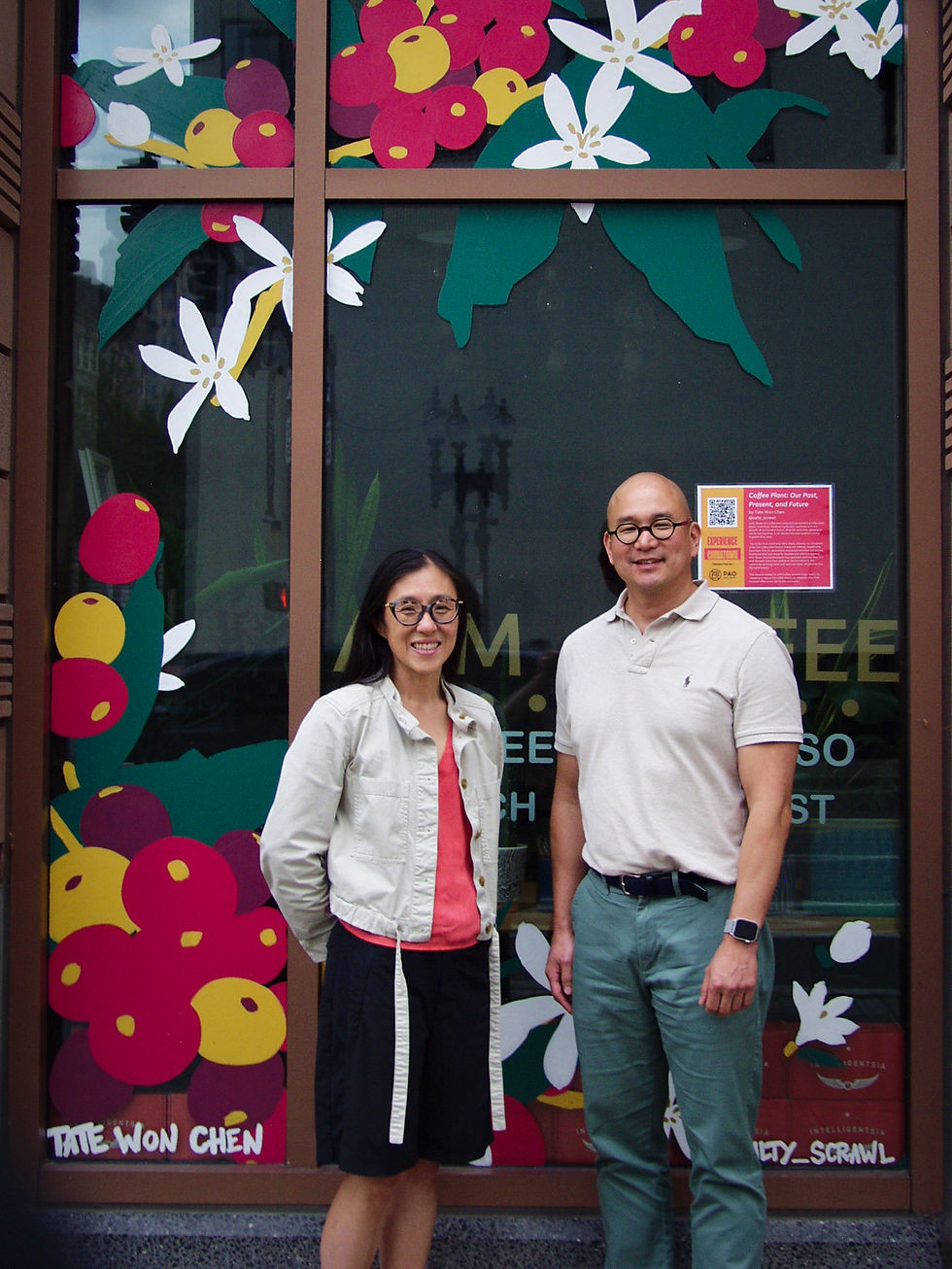
The current exhibition highlights the Boston Chinatown Cultural Plan, a collaborative effort by Pao Arts Center and other partnering organizations to preserve Chinatown’s cultural assets. Featured projects include historical photos of the 1980s Chinese immigrant garment worker strike in Boston, and paintings amplifying residents’ requests for safety and housing justice. In the classroom next to the gallery, a group of youth mural artists regularly meet and prepare for the upcoming Experiencing Chinatown, an annual public festival in which muralists work with local businesses to display their works on storefronts.
Pao Arts Center also serves as a bridge to connect artists with the neighborhood, says the group. Through an artists-in-residence program, artists build relationships with community members to tell stories of Chinatown’s Asian Americans. Amanda Beard Garcia, the 2026 artist-in-residence, will explore the history of local restaurant families through workshops, storytelling and collaborative art-making.
What makes Pao Arts Center an essential part of BCNC’s work, Woo said, is the social impact that arts and cultures generate: people feel they belong, see their stories represented on the gallery walls, and have a sense of community.
“Maybe people don't even realize that art can be more than just a painting on the wall,” said Woo. “Arts can be a way to engage community members in advocating for what's important to them.”
This story was funded in part by Boston 250, a public-private partnership between the City of Boston and private sector partners, including Meet Boston, State Street, The Boston Foundation, John Hancock, Eastern Bank, Liberty Mutual, Blue Cross Blue Shield of Massachusetts, Vertex Pharmaceuticals, and PNC Bank. Learn more at boston250.org.


Comments